- Home
- Programs
- Archives
Archives

From Personal Memory to the Public Record of Democracy
The Korea Democracy Foundation collects, preserves, organizes, and shares records documenting Korea's long journey toward democracy.
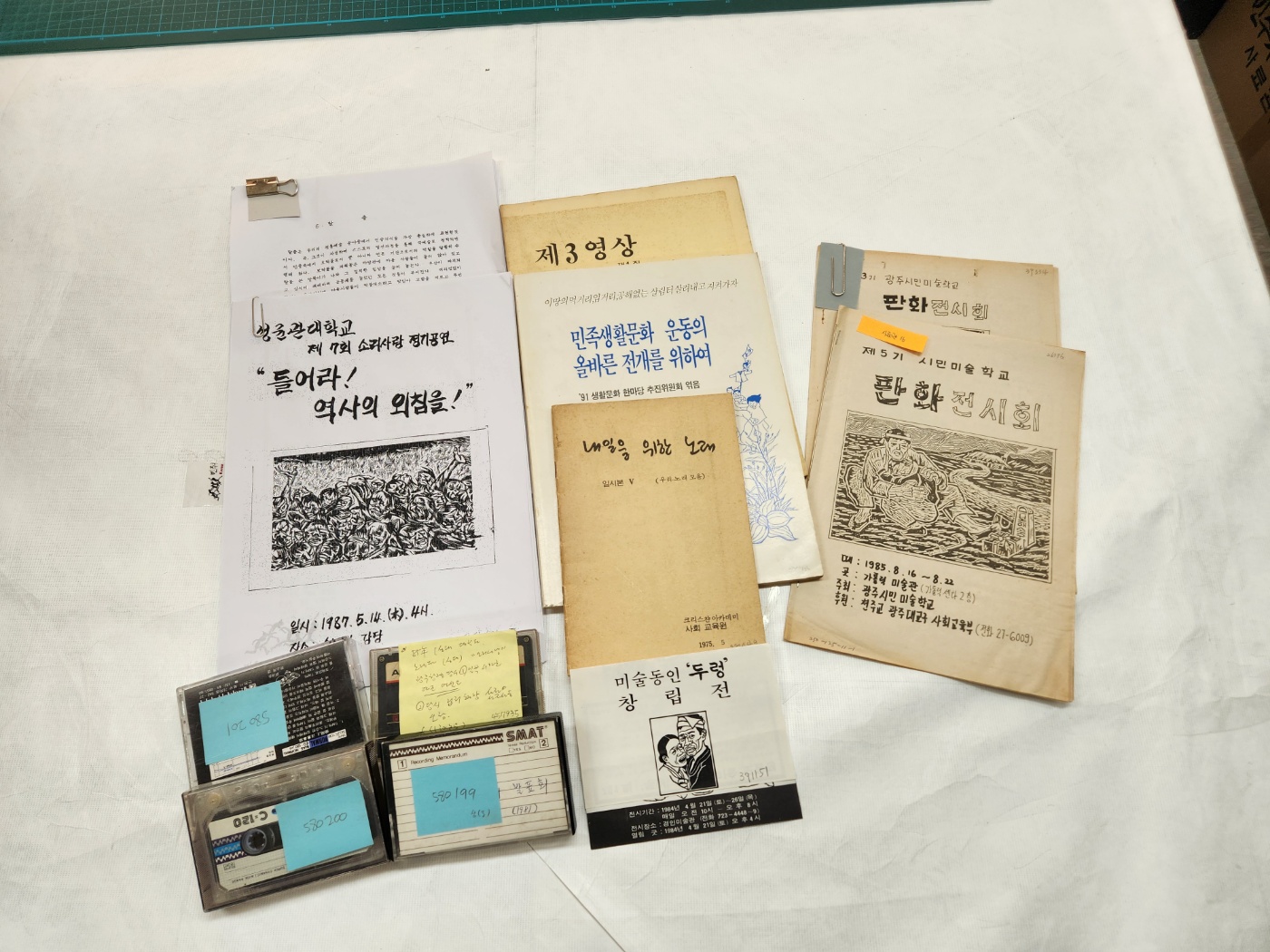
Democratic history is preserved not only in official documents. It also lives in photographs taken in the streets, letters exchanged between families, personal diaries and notebooks, posters and leaflets produced by civic organizations, audiovisual recordings, works of art, and objects carried and used by people who participated in movements for democracy.
KDF brings these diverse records together so that individual and collective memories can become part of the public record of Korean democracy—and remain accessible to future generations.
Today, KDF preserves and manages approximately one million records related to Korea's democratization movement, creating one of the country's major archival collections dedicated to the history of democracy.
Collecting the Records of Democracy
Every Record Has a Story
KDF continuously collects historical materials from individuals, activists, civic organizations, researchers, journalists, and others who witnessed or participated in Korea's democratic history.
The collection encompasses a wide range of materials, including documents, diaries, notebooks, letters, photographs, films, audio and video recordings, posters, pamphlets, banners, publications, personal objects, and works of art.
Oral histories are also collected to preserve experiences that may not have been documented in written records. Through these efforts, KDF seeks to ensure that the history of democracy reflects not only major political events and organizations, but also the voices and experiences of individuals whose lives formed part of democratic change. KDF's current archival program includes oral-history collection alongside preservation, restoration, database development, archival content, and storage management.
Donating Democratic Memory
Your Story Can Become Part of Our Shared History
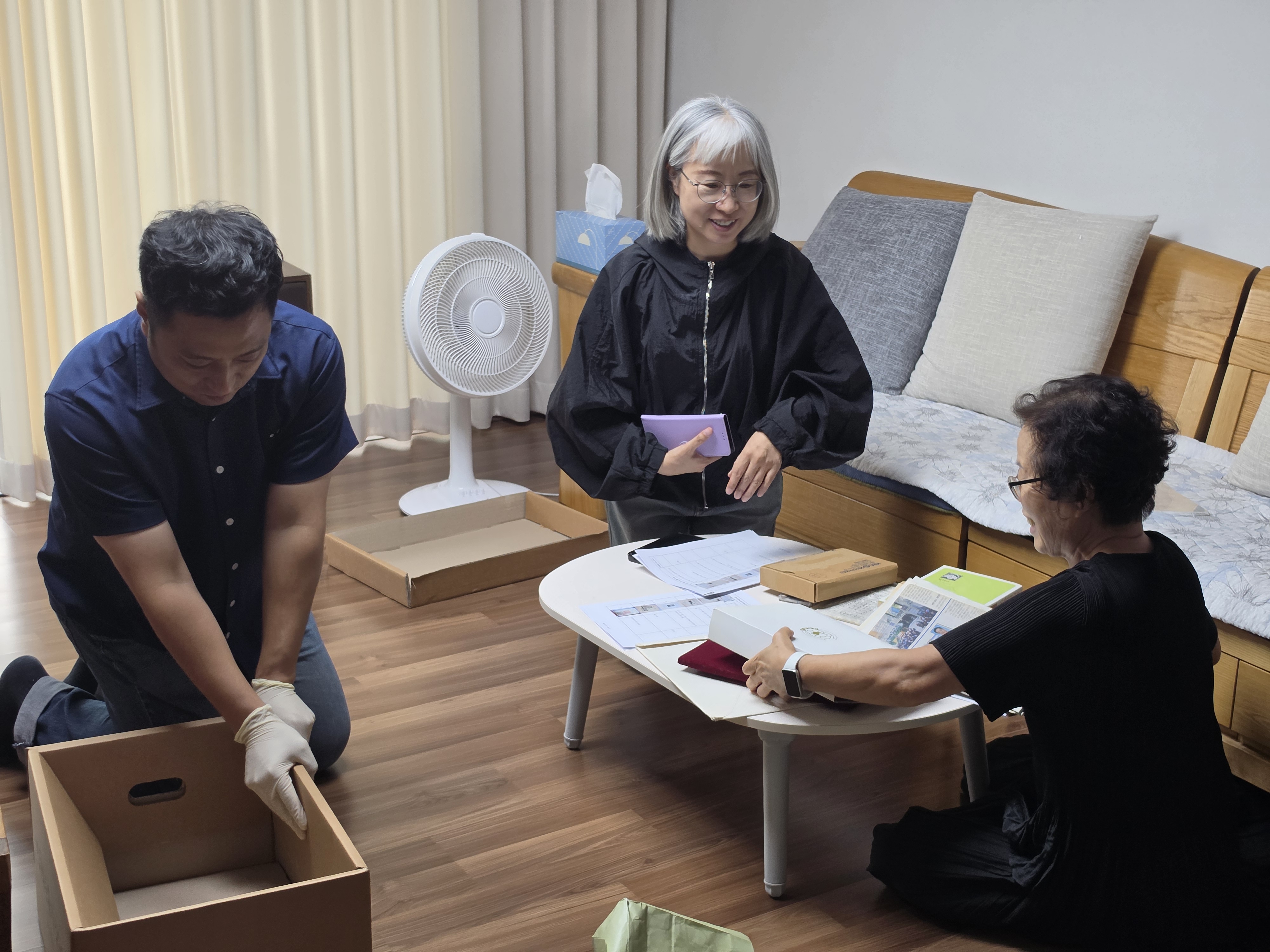
Many of KDF's most meaningful records have come from citizens.
A diary kept during a period of political repression, a letter sent from prison, photographs taken at a demonstration, a leaflet once distributed on a university campus, or an object kept for decades by a family may provide a unique window into Korea's democratic history.
KDF therefore encourages individuals and organizations to donate materials related to the democratization movement and democratic life.
In 2026, KDF launched the archival donation campaign Democracy in Your Drawer (당신의 서랍 속 민주주의) to discover records preserved in the everyday lives of citizens. Covering materials from the 1960s through 2025, the campaign sought records ranging from personal diaries, letters, and photographs to materials documenting the activities of organizations and social movements.
Donated materials are professionally documented and preserved, registered as part of the Museum's collection, and may become valuable resources for research, education, exhibitions, publications, and public programs.
Preserving Records for Future Generations
Collecting records is only the beginning.
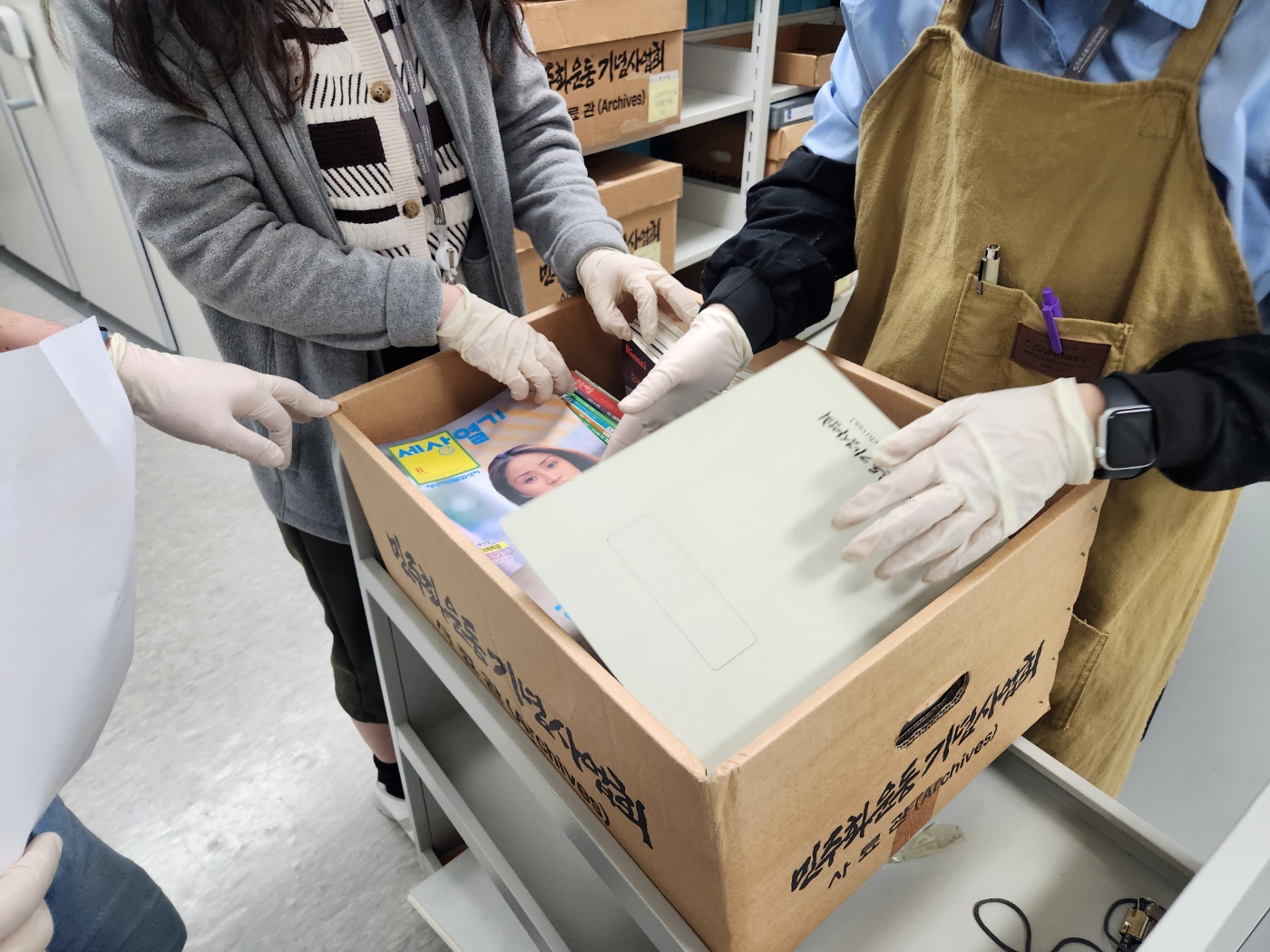
KDF professionally organizes, documents, preserves, restores, and digitizes archival materials so that they can survive beyond the generation that created them.
The Foundation manages preservation storage and continues to develop archival databases and collection-management systems. Its archival work is closely connected with the National Museum of Korean Democracy, where historical records become part of exhibitions, research, education, and public engagement.
This connection allows the archive to function not simply as a repository of the past, but as a living resource through which democratic history can continually be rediscovered and reinterpreted.
Open Archives
Returning Democratic Records to the Public
KDF believes that democratic records should not remain hidden in storage.
Open Archives is KDF's digital archive dedicated to making records of Korea's democratization movement accessible to the public.
The project began in 2011 as an open digital archive. It was further developed in 2015 with an emphasis on organizing archival information, and redesigned again in 2021 to provide a more user-friendly search and discovery experience.
Today, Open Archives provides access to a growing collection of documents, photographs, audiovisual records, objects, historical timelines, and thematic archival content. More than 660,000 item-level records are currently registered in its archival database.
Through Open Archives, KDF seeks to return historical records to society—making them available not only to researchers, but also to educators, students, journalists, creators, and anyone interested in Korea's democratic history.
Explore KDF Open Archives
From Archives to Research, Education, and Exhibitions
KDF's archives are closely connected with the Foundation's other areas of work.
Archival materials provide primary sources for research on the democratization movement and contribute to projects such as the Dictionary of the Korean Democratization Movement. They are used in permanent and special exhibitions at the National Museum of Korean Democracy, incorporated into educational programs, and made available for publications, documentaries, broadcasting, and other public uses.
This relationship creates a continuing process:
Collect → Preserve → Document → Digitize → Research → Share → Exhibit
In this way, records move from private hands and archival storage into research, education, exhibitions, and public dialogue.
Keeping Democratic Memory Alive
An archive is not simply a place where the past is stored.
It is a place where personal memory becomes shared history, where evidence of democratic struggle is protected, and where future generations can encounter the voices and experiences of those who came before them.
By collecting, preserving, and opening these records to the public, KDF seeks to ensure that the history of Korea's democratization movement remains a living public resource for understanding democracy today and imagining its future.
Every record carries a memory.
Every memory can become part of democratic history.