- Home
- Programs
- Democracy Education
Democracy Education

From Democratic History to Everyday Practice
Democracy is sustained not only by institutions, but by citizens who understand its history, engage with one another, and put democratic values into practice in everyday life.
The Korea Democracy Foundation (KDF) provides democracy education for citizens of different generations and backgrounds, connecting the history of Korea's democratization movement with contemporary questions of participation, human rights, coexistence, and civic responsibility.
At the heart of this work is the National Museum of Korean Democracy, opened in 2025 on a historic site associated with Korea's struggle for democracy (the former Namyeong-dong Anti-Communist Interrogation Office). Through exhibitions, historical spaces, dialogue, participatory learning, and public programs, the Museum has become a living platform where people encounter democratic history and consider what democracy means in their own lives.
Namyeong Evening School: Democracy Through Public Dialogue
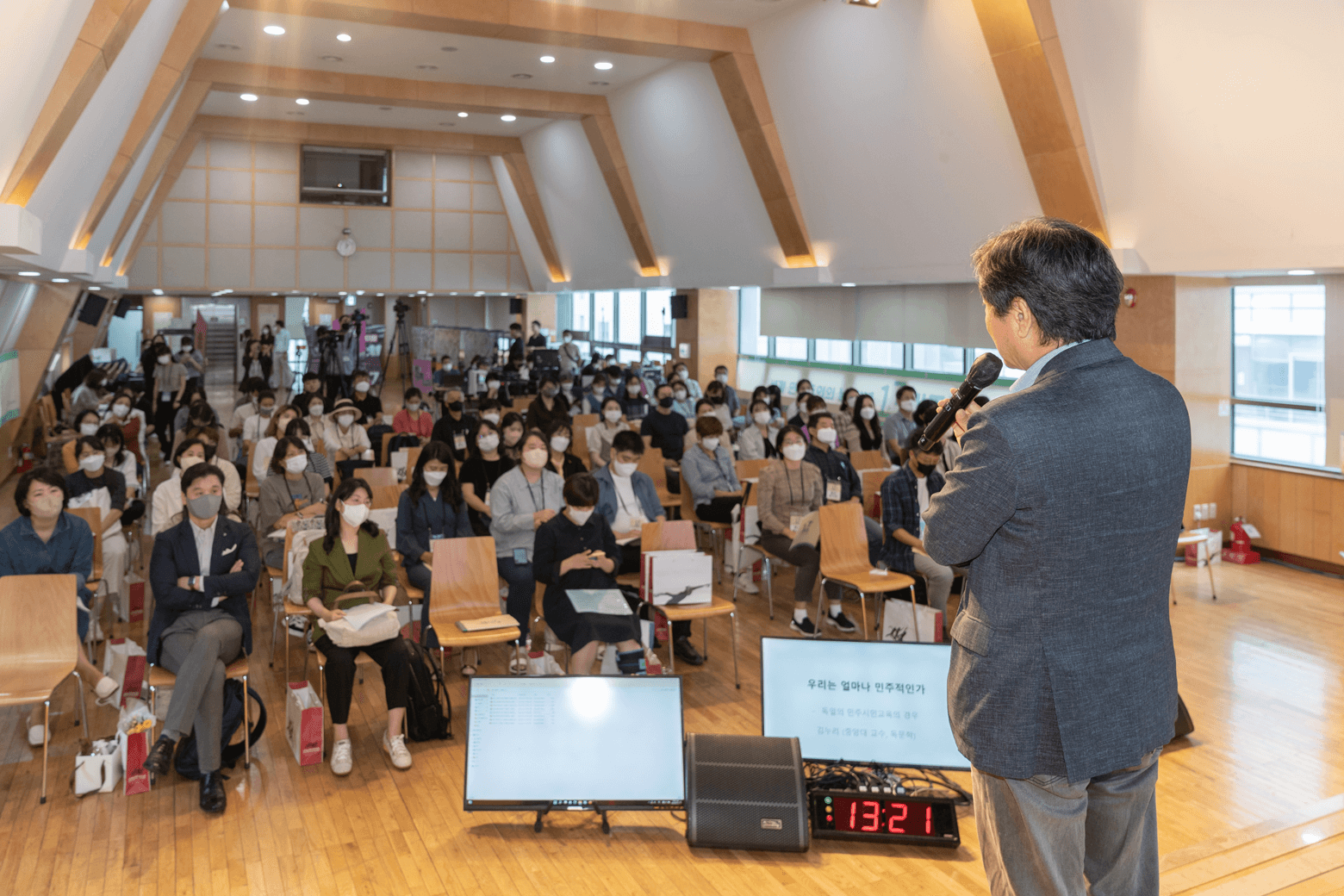
Namyeong Evening School (Namyeong Yahak) is the Museum's public lecture series for citizens.
Inspired by the historical tradition of yahak—evening schools that often served not only as places of learning but also as spaces of solidarity—the program brings citizens together with historians, researchers, writers, artists, architects, human-rights advocates, and other specialists.
Rather than presenting democratization as a completed chapter of history, each series approaches it from a different perspective. Programs have examined the life of Park Jong-cheol, the Constitution that emerged from the June Democratic Struggle of 1987, state violence and its survivors, architecture and authoritarian power, memory and healing, and the relationship between historical experience and contemporary society.
In 2026, the spring series, “The Springs of Democratization We Did Not Know,” revisited democratic movements associated with the spring season, continuing the program as a space where citizens encounter less familiar histories and discuss their meaning for democracy today.
Democracy Talk Concert: Bringing Democracy into Everyday Life
KDF's Democracy Talk Concert, held in connection with the International Day of Democracy, opens democratic discussion to a wider public through lectures, conversations, performances, and encounters among experts and citizens.
The 2026 program, “Beyond Hate and Discrimination: Where Change Begins,” explores democracy from two interconnected perspectives: democracy in education and democracy in everyday life.
Speakers and participants address issues including democratic education in schools, hate and discrimination, care and democracy, gender equality and women's rights, ecological citizenship, digital civic spaces, and new forms of citizen participation.
By bringing these different questions onto one stage, the Talk Concert presents democracy not as an abstract political concept, but as something shaped by the way people learn, care, communicate, disagree, participate, and live together.
Learning at the National Museum of Korean Democracy
The Museum offers age- and audience-specific programs that turn exhibitions and historical spaces into active learning environments.
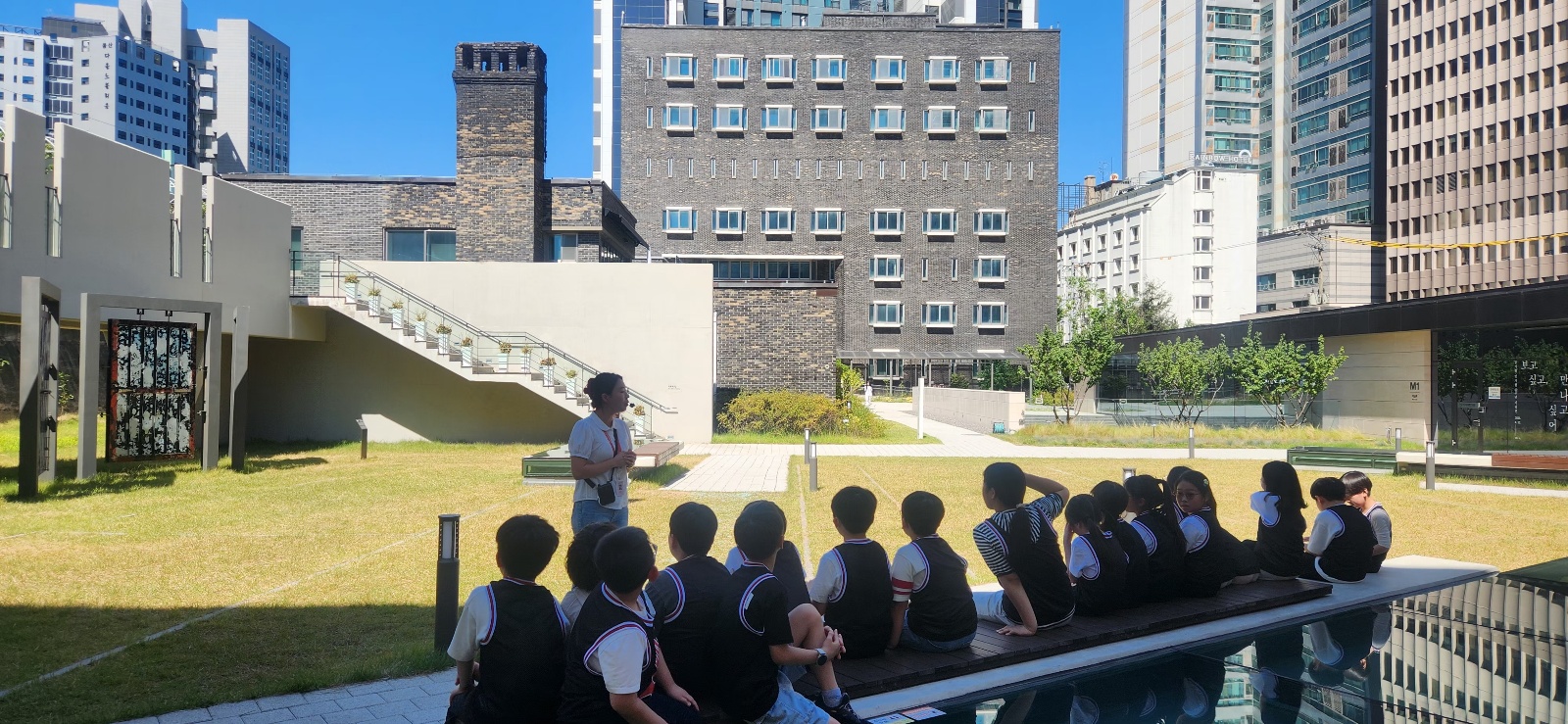
For children and young people, programs combine exhibition visits with storytelling, historical interrogation, missions, worksheets, discussion, and creative activities. Participants explore the June Democratic Struggle and other moments in Korea's democratic history while considering the choices and actions of ordinary citizens.
Programs such as “Grandpa Tteokbokki's Request” invite elementary-school students to investigate the social and political context of the 1970s and 1980s, explore the Museum's exhibitions, reconstruct the story of the June Democratic Struggle, and express what they have learned through their own writing and activities.
Democracy as a Family Experience
KDF also creates programs in which children and parents learn together.
Museum-based family programs encourage families to explore democratic history through exhibitions, photographs, activities, and conversation. Rather than separating children's learning from that of adults, participants share their own experiences and perspectives and consider together how democratic values are practiced within families and everyday relationships.
The 2026 vacation program “Values for Everyone! Our Democratic Family”, for example, invited elementary-school children and their parents to explore the meaning of democratic values through shared family experiences and participatory activities.
These programs extend democracy education beyond the classroom and make the Museum a place where generations learn from one another.
Making Democracy Education Accessible to Everyone
KDF is expanding democracy education so that people with different needs and abilities can participate meaningfully in the Museum.
Programs for deaf and hard-of-hearing visitors provide sign-language interpretation and guided educational experiences connecting the Museum's history with the June Democratic Struggle and broader questions of democracy.
KDF is also developing educational programs for people with developmental disabilities, while incorporating accessibility into exhibition interpretation and educational design.
This work reflects a simple principle: a museum dedicated to democracy should itself be a place in which everyone has the opportunity to participate, understand, and be heard.
Training the People Who Tell the Story
The Museum Interpreter Training Program prepares interpreters to connect visitors with the history, exhibitions, and meaning of the National Museum of Korean Democracy.
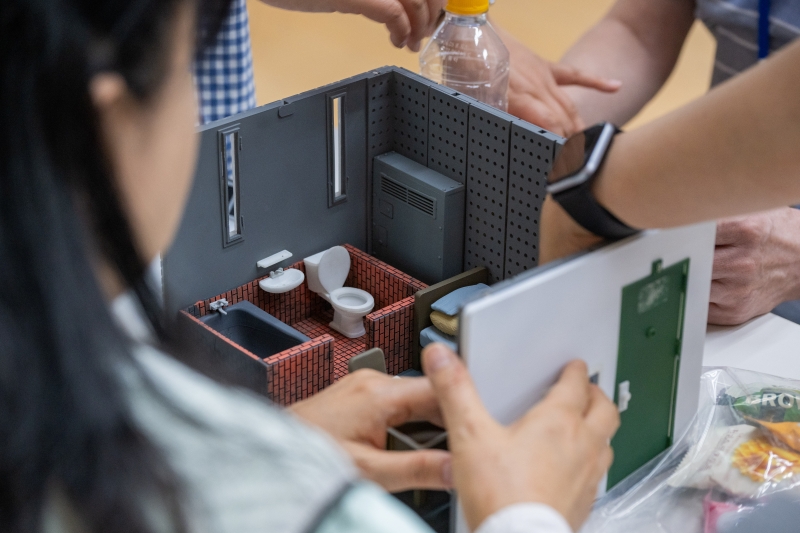
The program combines knowledge with the practical skills required for inclusive public interpretation. Training has covered the history of Korean democracy and democratization movements, state violence and human rights, the Museum's exhibitions and architecture, accessible interpretation, plain-language writing, communication and presentation skills, visitor engagement, safety, and emergency response.
Participants complete both theoretical and practical training and practice interpreting exhibitions before moving into further assessment and professional development.
Through this program, KDF develops interpreters not simply as guides who explain exhibits, but as facilitators who help visitors connect historical experience with questions about democracy today.
Teachers and the Next Generation
KDF continues to provide democracy education and professional development for teachers, helping educators connect Korea's modern history and democratization movement with classroom learning and contemporary civic education.
For young people, KDF also operates the Youth Social Participation Presentation Program, which has continued since 2009. Based on the Project Citizen model, the program encourages participants to identify problems in their communities, investigate their causes, develop public-policy alternatives, and present their proposals.
The emphasis is on learning democracy by doing it: identifying common problems, listening to different perspectives, discussing alternatives, and participating in the search for solutions.
A Museum Where Democracy Is Learned, Discussed, and Practiced
The National Museum of Korean Democracy is more than a place where the history of democratization is displayed.
Through public lectures, talk concerts, programs for children and families, accessible education for people with disabilities, teacher training, youth participation, and professional interpreter development, the Museum brings together memory, learning, dialogue, and participation.
KDF's democracy education therefore begins with history but does not end there. It asks each visitor and participant to consider a larger question: What does it mean to practice democracy today?
By creating opportunities to remember together, learn together, speak together, and participate together, KDF seeks to carry democracy from history into everyday life—and from one generation to the next.